



Controlled residential ventilation in Vienna and the surrounding area
Fresh air around the clock, less heat loss and protection against mould: AIRTEC designs and installs controlled residential ventilation for detached houses, residential complexes, care homes and commercial buildings in Vienna and the surrounding area.
What is controlled residential ventilation?
Controlled residential ventilation exchanges the indoor air continuously and automatically: stale air is extracted while filtered fresh air flows in. With heat recovery, the extract air passes its warmth on to the supply air, so hardly any heating energy is lost through ventilation. It is essential in passive houses, and in low-energy houses it also noticeably reduces heating costs.
It should not be confused with air conditioning: air conditioning mainly cools the indoor air, whereas residential ventilation is all about supplying fresh air. For an overview of all our systems, from car park ventilation to stairwell pressurisation, see Ventilation.
Your benefits
Clean indoor air even when opening the windows is not enough, for example in winter or when there is no wind.
Lower CO₂ levels in bedrooms and living rooms, and less dust, pollen and pollutants thanks to filtration.
Peace and quiet with the windows closed – especially on busy roads.
No draughts, no insects, fewer odours.
Lower heating demand thanks to heat recovery.
Protection against damp damage and mould, as moisture is removed evenly.
Gentle cooling via the supply air is possible in summer.
Central, cascade or decentralised: the systems compared
System | Design | Suitable for |
|---|---|---|
Central residential ventilation | One ventilation unit, supply and extract air in every room | New builds, maximum comfort |
Cascade ventilation | One ventilation unit, supply air to living rooms and bedrooms, extract air from bathroom, WC and kitchen, air transfer via the hallway | Detached houses, new builds and refurbishments |
Decentralised single-room units | One unit with a heat exchanger directly in the room | Retrofitting individual rooms |
Single-room extract ventilation | Small fans in bathroom, WC and kitchen, without heat exchanger | Internal wet rooms, a simple and inexpensive solution |
Central residential ventilation
Every room has its own supply and extract opening, and the air volume can be controlled individually for each room. On the other hand, the ductwork is more complex and the air flow rate is higher, as the supply air is not used more than once. In long rooms, a long-throw nozzle is recommended for the supply air; extract openings are placed as close to the ceiling as possible.
Cascade ventilation
Air flows from the living rooms and bedrooms through the hallway into the wet rooms, where it is extracted. This saves ductwork, air volume and fan power and keeps the indoor air less dry in winter – which is why cascade ventilation has become the standard in detached houses. However, open or closed doors affect the air flow, and any transfer openings required must be designed with sound insulation in mind. Careful planning is therefore crucial so that the air enters the bedrooms quietly.
Decentralised single-room units
If only some of the rooms are to be ventilated, single-room units with a heat exchanger are a simple and inexpensive solution that is also easy to retrofit. Points to bear in mind: lower efficiency, audible noise in the room, a possible air short circuit if supply and extract are close together, warm supply air in summer because the air is drawn in at the façade, and limited filtration.
Supply air inflow
Wherever air is extracted, fresh air must be able to flow in in a controlled way. We provide the supply air inflow, for example, with the modular 160 series system from LUNOS: the components are compatible with each other, suitable for new builds and refurbishments, and can be matched precisely to your needs.
Single-room extract ventilation without heat exchanger
Single-room extract ventilation is a simple extract system for internal wet rooms such as bathrooms, WCs and kitchens. This is how it works:
Small room fans in the individual rooms extract the humid, stale air.
An overrun relay or hygrostat controls the fans: the hygrostat continuously monitors the humidity in the bathroom and switches the fan on automatically as soon as the set value is exceeded.
Collective duct via the roof: the extract air is led outside over the roof through a shared collective duct.
Air inlets in the external wall or in the windows let fresh air flow in.
Advantages and disadvantages of single-room extract ventilation
Advantages: simple, low-cost ventilation technology with little maintenance – only the fan filters need changing regularly.
Disadvantage: as there is no heat exchanger, energy consumption does not fall – the heat of the extract air is lost. If you want to save on heating costs, residential ventilation with heat recovery is the better choice.
The units we work with
For larger properties, from student halls and care homes to hotels and office buildings, we use ventilation units with heat recovery from the WERNIG CA 800 ECO to CA 6000 ECO series. We also supply the CKL-A-2200 model from Wolf.
New builds and retrofitting in older buildings
In new builds, we plan the ventilation together with the architect and building services engineers from the very beginning. For heating, an air-to-water heat pump is a good choice, which we also design and install. In existing buildings, we check on site which system is structurally feasible – cascade ventilation or single-room units are often the most economical solution.
Maintenance and filter changes
To keep the air clean, filters must be changed regularly and the unit serviced – usually once a year, or more often under heavy use. On request, we take care of this with a maintenance contract.
Service area: Vienna and surroundings
We design and install residential ventilation throughout Vienna as well as in Mödling, Baden, Klosterneuburg, Schwechat, Tulln, Korneuburg and the wider Vienna area.
Frequently asked questions about residential ventilation
How much does controlled residential ventilation cost?
It depends on the system, the living area and whether it is a new build or a retrofit. After a free on-site visit, you will receive a binding quote.
How loud is residential ventilation?
When properly designed, the system is barely audible in the living space. The key factors are the sizing of the air volumes and the sound attenuation, especially for the bedrooms.
Can I still open the windows?
Yes. Outside the heating season, opening the windows as well actually makes sense, as it reduces the fan's power consumption.
Can residential ventilation be retrofitted in an older building?
Yes. Depending on the building fabric, cascade ventilation or decentralised single-room units are suitable, as they do not require extensive ductwork.
How often does the filter need to be changed?
That depends on the unit and its location. We recommend changing the filter at least once a year, or more often under heavy use.
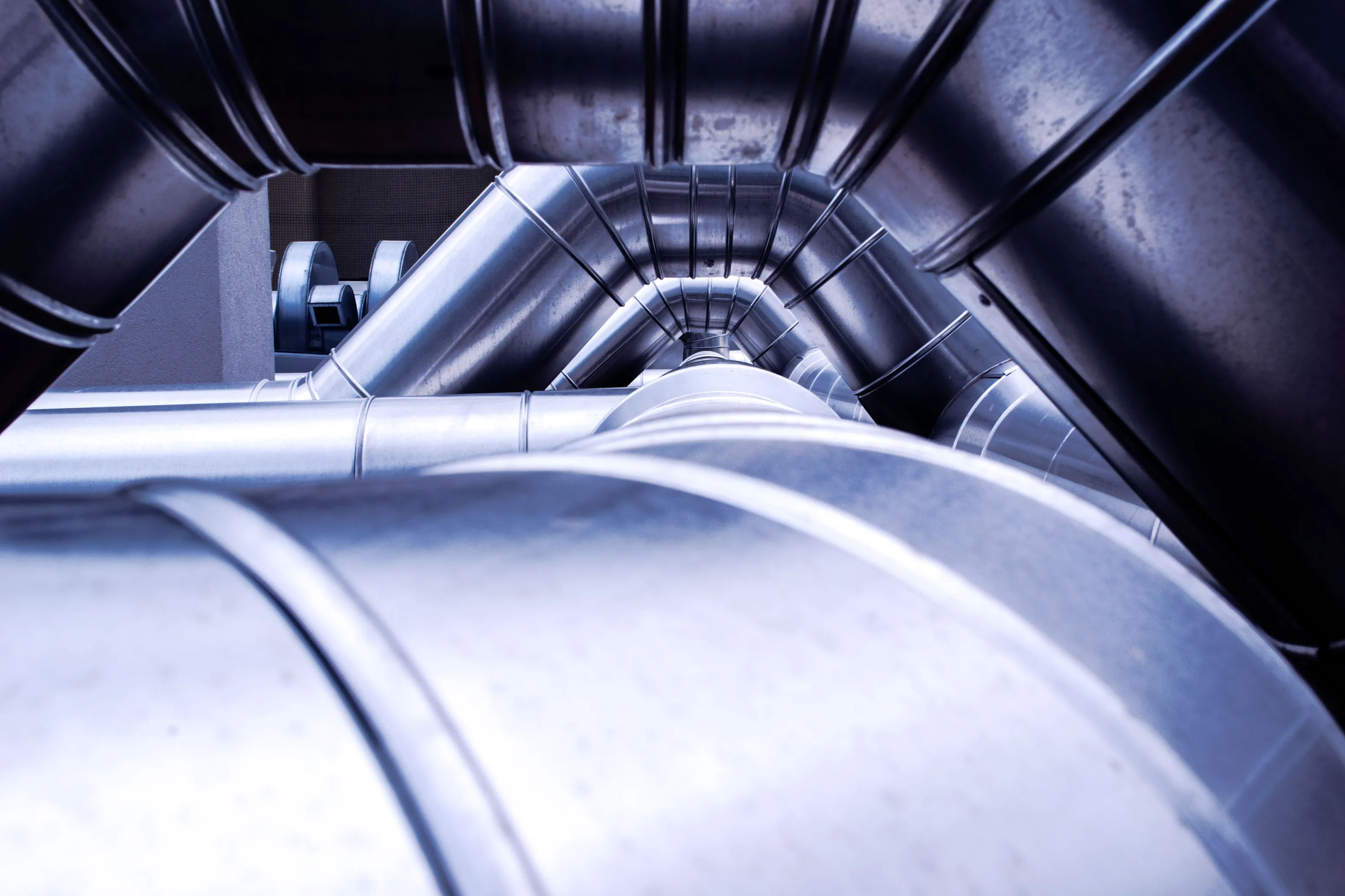
Fresh air for your home
Planning a new build or looking to retrofit? Call us on +43 1 804 05 71 – we will advise you personally.